
Thailand's spa industry is no longer defined only by tradition, atmosphere and individual therapist skill. Modern Thai spa businesses now compete on trust, training, hygiene, local SEO, online booking, reviews, guest retention and the ability to translate Thai wellness culture into a reliable hospitality brand. Use it alongside the traditional Thai massage guide and the aromatherapy oil massage guide and the Thai massage training standards article to move from background reading into a clearer booking decision.
Why Thai Spa Businesses Are Entering a New Era
Thai spa businesses are entering a new era because wellness tourism has become more selective. Travelers still arrive in Thailand with curiosity about Thai massage, aromatherapy, herbal compresses and hospitality rituals, but they no longer choose only from a street sign or a hotel brochure. They compare Google Maps profiles, recent reviews, treatment photos, online menus, booking flows, therapist credentials and whether the brand feels professional before they ever step inside.
Bangkok, Phuket, Chiang Mai, Hua Hin and resort destinations all show the same pattern: competition is not only about price or decoration. A spa has to prove that it is safe, clean, well managed, easy to understand and consistent. The strongest wellness brands protect the cultural value of Thai massage while making the guest journey easier for international travelers, expatriates, boutique hotel guests and local professionals who expect reliable service every time.
From Traditional Thai Massage to Modern Wellness Brands
Traditional Thai massage remains the emotional center of Thailand's spa identity. It carries cultural depth, bodywork knowledge, ritual, hospitality and a sense of place that cannot be copied by a generic wellness chain. At the same time, many successful operators have moved beyond the old model of a simple walk-in salon. They now build structured treatment menus, boutique interiors, multilingual service descriptions, therapist training plans, retail products, membership offers and digital booking systems.
This does not mean tradition is being replaced by marketing. The better interpretation is that tradition needs a stronger operating system. A small Thai massage studio can still feel authentic while using online reservations, clearer intake forms, better photography and standard operating procedures. A hotel spa can feel premium without becoming impersonal if it preserves the rhythm of Thai hospitality. The modern wellness brand is not less Thai; it is more understandable, repeatable and trustworthy for today's guest.
The Role of Therapist Training and Service Standards
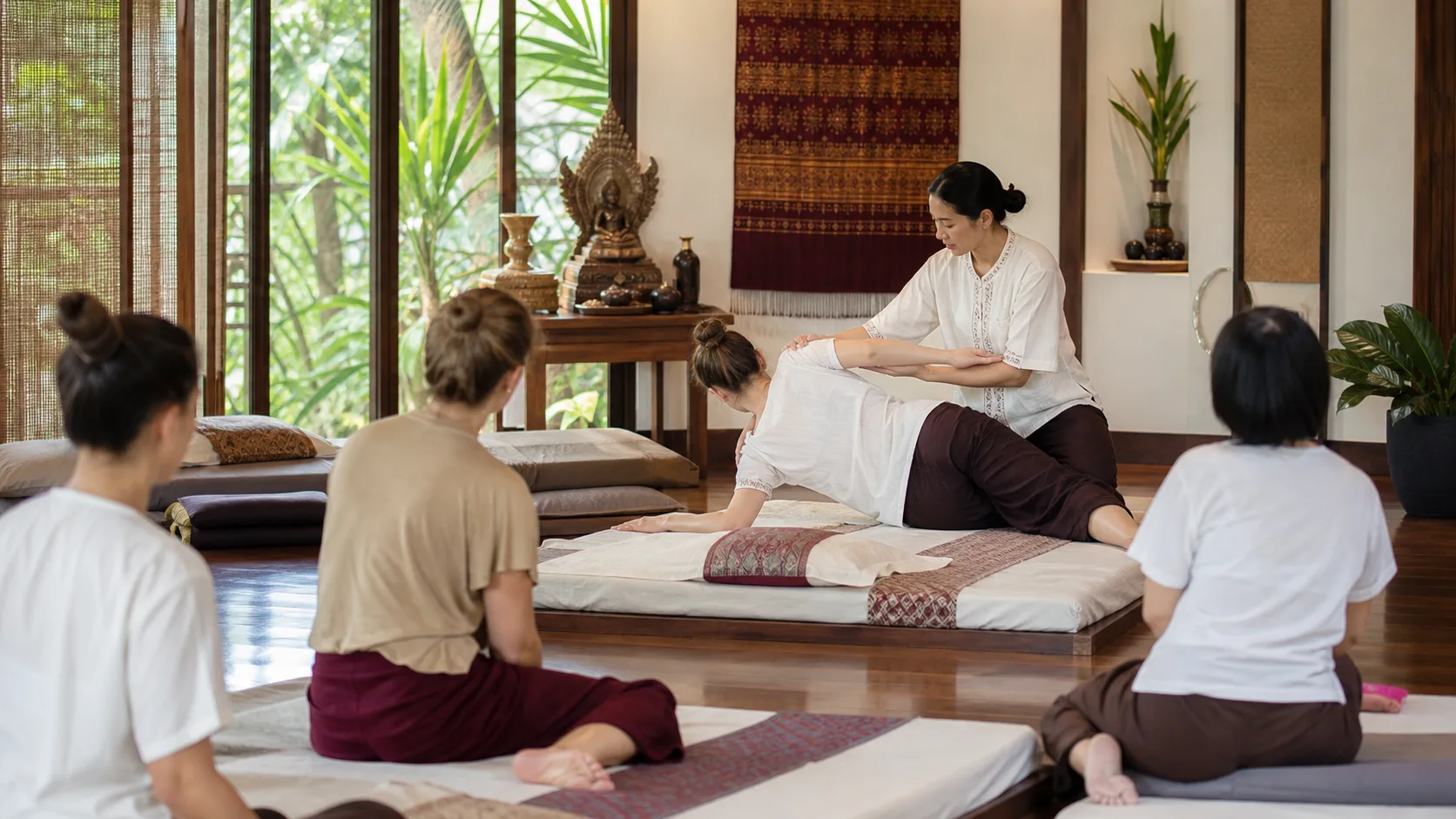
Therapist training is the foundation of long-term spa growth. Digital visibility can bring a guest to the door, but only service quality can earn a positive review, a return visit and a recommendation. In Thai massage, training affects pressure control, safe assisted stretching, sequencing, communication, draping, hygiene and the ability to adapt a treatment to different bodies. A rushed or poorly trained session can damage the reputation of an otherwise beautiful spa.
Standards also protect therapists. Clear protocols reduce guesswork, make room turnover calmer, define contraindications, improve handover between reception and treatment room, and prevent staff from relying on excessive force. Owners who invest in training, supervision and refreshers usually create more stable teams. The result is visible to guests: cleaner transitions, better pressure adjustment, fewer awkward moments and a sense that the spa knows exactly what it is doing.
Why Digital Trust Matters Before the Guest Even Arrives
Digital trust begins before the booking. A traveler searches for a Thai spa business on Google Maps, reads recent reviews, checks whether prices are visible, scans photos for cleanliness, compares massage styles and looks for signs that the business is still active. If the website is outdated, the menu is vague, the booking button fails or reviews mention inconsistent service, doubt enters the decision. In a competitive market, doubt is expensive.
The website and Google Business Profile should answer the questions a receptionist would answer in person: What treatments are available? How long do they take? Is Thai massage clothed or oil-based? Can pressure be adjusted? Is the spa suitable after a long flight? Are facials, aromatherapy or heat rituals available? Where is the location? How do guests book? Clear answers reduce friction and make the first visit feel safer.
Local SEO and Online Visibility for Spa Businesses
Local SEO for spas is not a trick; it is the process of making a real service easier to discover and evaluate. A strong spa website should have individual pages for Thai massage, aromatherapy, facials, body scrub rituals, herbal compresses and relevant neighborhoods when the business serves a dense city like Bangkok. Helpful blog content can answer search intent around how to choose a good spa in Thailand, what to expect from Thai massage, how travelers should plan recovery after flights and how wellness tourism is changing.
Google Business Profile matters because many guests make decisions directly from the map results. Accurate opening hours, quality photos, consistent categories, service details, review responses and location signals all support trust. Backlinks and mentions from relevant wellness, travel, hospitality and local business websites can reinforce authority, but they work best when the underlying service is strong. Visibility should amplify quality, not disguise weakness.
The Connection Between Spa Operations and Digital Strategy
A spa's digital strategy cannot be separated from operations. If the booking system promises a treatment that the team cannot consistently deliver, marketing creates disappointment. If the menu is too complicated for reception to explain, SEO pages may attract traffic but not confident bookings. If review responses sound polished but the same complaint repeats, reputation management becomes cosmetic rather than operational.
For owners who want to structure operations, improve guest trust and build a stronger online presence, working with specialists in spa consulting and digital strategy for wellness businesses can help connect service quality, management systems and long-term brand growth without reducing the spa experience to advertising alone.
Sustainable growth comes from connecting treatment design, therapist capacity, service standards, pricing, customer care, photography, reviews, local SEO and retention. Owners need to know which treatments are profitable, which therapists need training support, which reviews reveal process gaps and which online pages bring qualified guests. The best digital strategy for a wellness business is not louder promotion. It is a cleaner connection between the promise made online and the experience delivered in the room.
A practical example of this shift is the way premium Thai spa services are moving into mobile booking and hotel-room delivery. For travelers in Bangkok who want a high-end massage or facial at home or directly at their hotel, the NUAD APP offers a useful model: it connects guests with trained therapists backed by the prestigious, award-winning Loft Thai Spa environment, rather than leaving the experience to unknown freelancers. The promise is not simply convenience. It is premium service control, with more than 60 treatments, five-star-hotel-style standards and an app-based booking journey designed for guests who expect quality before the therapist even arrives.
This is digital transformation in a very concrete form. The spa is no longer limited to a physical reception desk, a phone call or a walk-in appointment. It can use an online platform to extend its standards into private residences, serviced apartments and luxury hotels while keeping therapist selection, treatment menus, scheduling and guest expectations under one professional system.
Customer Experience: The Real Ranking Factor Behind Spa Growth
Customer experience is the real ranking factor behind spa growth because it produces the signals that digital platforms and human guests both notice. A guest who feels welcomed, understood and respected is more likely to leave a detailed review, return for another session, buy a package, recommend the spa to a friend or trust a higher-value treatment. A guest who feels rushed may still pay, but the relationship ends at the door.
The best spas treat the customer journey as a sequence: discovery, booking, arrival, intake, treatment, aftercare, payment, follow-up and rebooking. Every step can build or erode trust. Simple details matter: a clean reception, clear pressure questions, towels ready on time, accurate treatment duration, quiet transitions, water after the session and a professional response if something goes wrong. In this sense, guest experience is both hospitality and business infrastructure.
How Spa Owners Can Build a More Resilient Business Model
A resilient Thai spa business does not depend only on walk-in traffic or seasonal tourism. Owners can build stability through packages, memberships, gift vouchers, hotel partnerships, corporate wellness offers, CRM follow-up, therapist development and a menu that makes repeat visits logical. A guest who first books Thai massage may later return for aromatherapy, a facial, a body scrub, a couples package or a monthly recovery routine if the brand explains the path well.
Retention marketing should feel helpful, not pushy. Follow-up messages can remind guests of aftercare, suggest a gentler service after travel, invite feedback or offer a seasonal ritual. Automation can support the relationship, but it should not replace human warmth. The strongest business model is balanced: enough systems to stay organized, enough personality to feel Thai, and enough discipline to protect service quality as demand grows.
What Travelers Should Look for in a Quality Thai Spa
Travelers can use the same framework owners use. Before booking, look for clear service descriptions, recent reviews, real photos, clean treatment rooms, transparent prices and evidence that the spa understands different guest needs. Ask whether pressure can be adjusted, whether the therapist should avoid any injury or sensitive area, whether oil massage uses fragrance, and whether a heat ritual is appropriate after a long day in the sun.
A quality spa should make questions feel normal. If the staff cannot explain the difference between Thai massage, oil massage, aromatherapy and herbal heat rituals, the guest may be buying a vague label rather than a service. Tourists should also avoid judging only by luxury decor. Some small spas are excellent because their training and communication are strong. Some expensive rooms disappoint because the service flow is weak. Trust the practical signals.
Future Trends in Thai Wellness and Spa Businesses
The future of Thai wellness will likely be shaped by personalization, digital booking, reputation management, training systems, sustainable products, hybrid treatments and stronger links between spa, skincare, grooming, hotel hospitality and wellness tourism. Head spa concepts, aromatherapy design, facial treatments, recovery-focused massage and corporate wellness packages are already part of the broader conversation. Guests increasingly want treatments that fit their lifestyle, not just a generic spa menu.
AI marketing and automation may help owners analyze reviews, plan content and manage communication, but the human service remains central. A Thai massage therapist who listens well, adjusts pressure and creates calm cannot be replaced by software. The opportunity is to use digital tools to protect the human part of the business: better scheduling, clearer education, smarter follow-up, more useful content and fewer avoidable misunderstandings.
Infographic Brief: The Modern Thai Spa Growth Framework
Create a vertical infographic titled The Modern Thai Spa Growth Framework in 1200 x 1800 px. The visual style should feel premium and minimal, inspired by Thai wellness hospitality: natural beige background, deep green section headers, soft gold line details, off-white content cards, subtle botanical texture and clean editorial typography. Avoid cartoon icons. Use refined line icons for towels, therapist hands, review stars, map pins, guest profiles and membership cards.
Use six main blocks. 1. Service Quality: clear menu, realistic timing, hygiene protocols, treatment consistency and aftercare. 2. Therapist Training: pressure control, assisted stretching safety, SOPs, communication and continuing education. 3. Digital Trust: Google reviews, accurate photos, transparent prices, online booking and review responses. 4. Local SEO: Google Business Profile, service pages, neighborhood content, helpful guides and relevant backlinks. 5. Guest Experience: intake, comfort, personalization, recovery time and complaint handling. 6. Retention and Membership: packages, gift vouchers, CRM, follow-up, corporate wellness and seasonal rituals. Add a mini legend: These six pillars connect Thai wellness tradition with modern business systems, helping spas build durable trust instead of short-term visibility. Suggested CTA at the bottom: Build a spa experience guests can trust before, during and after the treatment.
Technical SEO Recommendation: FAQPage Schema and Editorial Signals
The article should be supported by Article schema and, where the publishing workflow allows it, FAQPage schema for the eight questions below. The schema should mirror the visible FAQ exactly, not introduce hidden promotional copy. The title tag should remain concise, the meta description should focus on Thai spa business transformation, and the slug should stay short enough to be memorable.
For internal linking, connect this page to Thai massage service education, aromatherapy, therapist training and business-oriented spa guides. The single contextual anchor used for the NuadSpa reference appears once in the operations and digital strategy section. Avoid repeating the same commercial anchor elsewhere on the page. The page should read as a serious industry guide first and a resource bridge second.
Conclusion
The future of Thai spa businesses depends on balance. Tradition gives the industry its depth: Thai massage knowledge, hospitality, ritual, touch, scent and a cultural sense of care. Strategy gives that tradition a stable business frame: training, hygiene, online visibility, booking systems, reputation management, retention and clear operations. When one side is missing, growth becomes fragile.
For owners, the lesson is practical. Do not treat digital transformation as a separate marketing project. Treat it as the visible layer of service quality. For travelers, the lesson is equally useful: the best spas are not only beautiful. They are organized, transparent, trained, responsive and consistent. Thai wellness can remain deeply human while becoming more professional, more discoverable and more resilient.
Suggested internal and authority links
Continue with the traditional Thai massage guide and the aromatherapy oil massage guide and the Thai massage training standards article. These internal guides support the same semantic cluster and help readers move from inspiration to a clearer booking or planning decision.
Neutral authority sources:
Practical takeaway
Choose the service that fits your goal, communicate preferences early and stay cautious around exaggerated promises. Thai massage and spa rituals can be valuable wellness experiences when they are clean, respectful and realistic.
FAQ
Why is Thailand known for spa and Thai massage?
Thailand is known for spa and Thai massage because the country combines a long bodywork tradition with hospitality, tourism infrastructure and a strong sense of ritual. Thai massage is not simply a relaxation service; it is associated with assisted stretching, rhythmic pressure, clothed bodywork, herbal traditions and a cultural approach to care that many travelers remember vividly. At the same time, Thailand has developed a mature wellness tourism environment where hotels, boutique spas, training schools and independent studios all contribute to the country's reputation. What makes the market distinctive is the range: a visitor can find a simple neighborhood massage shop, a traditional training environment, a hotel spa, a luxury aromatherapy ritual or a facial and recovery concept built for international guests. That variety creates opportunity, but it also creates uneven quality. This is why modern readers should look beyond the phrase Thai massage and evaluate training, hygiene, communication, reviews and service structure before booking. The strongest experiences usually combine cultural sensitivity with modern hospitality systems, so guests feel both the charm of Thai wellness and the reassurance of professional standards. It also helps owners explain why discipline, not decoration alone, defines real Thai spa value.
What makes a Thai spa business successful today?
A successful Thai spa business today needs more than a good location and attractive decor. It needs a clear service promise, trained therapists, consistent operations, transparent pricing, strong hygiene standards, a smooth booking process and a reputation that matches the real guest experience. The most resilient spas understand that quality and visibility are connected. A beautiful website can bring attention, but service quality creates the reviews and repeat visits that sustain growth. Owners also need to think about treatment menu design, staff scheduling, therapist retention, retail products, memberships, follow-up communication and whether the brand can explain its value to both tourists and local residents. Success is not about copying every trend. It is about choosing a clear position, delivering it repeatedly and making the guest feel safe before, during and after the treatment. In competitive destinations like Bangkok, trust is often the difference between a one-time booking and a loyal client relationship. The best operators review feedback regularly and adjust operations before small issues become brand patterns. That discipline also makes marketing easier, because every page, photo and offer can describe a service standard the team is actually ready to deliver.
How important is therapist training in a Thai massage spa?
Therapist training is one of the most important factors in a Thai massage spa because it affects safety, comfort, consistency and reputation. A well-trained therapist understands pressure control, body mechanics, sequencing, contraindications, assisted stretching, draping, hygiene and how to communicate with different types of guests. Training also helps the therapist adapt. A traveler after a long flight, an office worker with neck tension, a first-time guest, a pregnant guest and a regular client who wants firm pressure should not all receive the same session. Strong training makes those distinctions possible without making the experience feel clinical. From a business perspective, training reduces complaints and increases review quality because guests can feel when a service is structured. It also protects therapists from overusing strength or working in unsafe positions. For owners, continuing education and supervision should be treated as a business investment, not a cost to minimize. It also gives reception teams confidence when explaining treatments because the promise is backed by real technique. It also makes hiring and onboarding easier, because new therapists can learn the spa's standards instead of guessing from different colleagues each day during busy weekend service periods.
Why do online reviews matter so much for spa businesses?
Online reviews matter because spa services involve trust before proof. A guest cannot fully evaluate a massage, facial or aromatherapy ritual until after the treatment is finished, so they rely on signals from people who have already visited. Reviews help answer questions that a menu cannot always answer: Was the spa clean? Was pressure adjustable? Did the booking run on time? Were staff respectful? Did the service match the description? Did the business respond professionally when something went wrong? For spa owners, reviews are also operational data. Repeated comments about rushed service, unclear pricing, room temperature, therapist communication or booking problems should be studied, not dismissed. A calm, specific review response can build trust, but only if the business also fixes recurring issues. In local SEO, reviews can influence click-through and conversion because they sit close to maps, photos and booking buttons. Reputation is therefore both a marketing asset and a service feedback system. Good teams treat reviews as a weekly management dashboard, not an occasional marketing chore. Over time, this habit turns guest comments into concrete training, scheduling and communication improvements that competitors can see but cannot easily copy.
How can spa owners improve their visibility on Google?
Spa owners can improve visibility on Google by combining accurate local information with useful content and a strong reputation. The basics matter first: claim and maintain the Google Business Profile, keep hours accurate, choose relevant categories, upload real photos, list services clearly and respond to reviews professionally. The website should support the same information with dedicated pages for core treatments such as Thai massage, aromatherapy, facial care, body scrub rituals and herbal heat. A spa in Bangkok may also benefit from neighborhood context if guests search by area. Blog content should answer real questions rather than publish generic wellness slogans. Helpful topics include how to choose a Thai spa, what to expect from traditional Thai massage, how to plan a spa day after travel and how heat or aromatherapy rituals work. Visibility also improves when the brand earns relevant mentions and backlinks from credible wellness, travel or hospitality sources. Search performance is strongest when online signals reflect real service quality. Owners should measure calls, bookings and qualified inquiries, not rankings alone. They should also refresh old pages when services, prices, opening hours or therapist capacity change.
What should tourists check before booking a spa in Thailand?
Tourists should check practical trust signals before booking a spa in Thailand. Start with recent reviews, not only the average rating. Look for comments about cleanliness, pressure adjustment, staff communication, punctuality and whether the treatment matched the menu. Check photos for treatment rooms, reception and facilities rather than only decorative close-ups. Read the service description carefully: traditional Thai massage is usually different from oil massage, aromatherapy, body scrub or herbal compress rituals. Ask about pressure, injuries, pregnancy, fragrance sensitivity or heat sensitivity before the session begins. Transparent pricing matters too. A professional spa should make duration, inclusions and add-ons clear. Tourists should also consider timing. A very firm massage immediately after a long flight or a hot walking day may not suit every body. The best choice is often the spa that answers questions calmly and helps the guest choose an appropriate treatment, not simply the one with the most luxurious photos. A little preparation turns a random appointment into a safer wellness decision. It also helps to choose a comfortable, realistic appointment time, with enough buffer before dinner, flights or shopping plans later in the same travel day.
How does digital transformation improve the guest experience?
Digital transformation improves the guest experience when it removes uncertainty and supports better service delivery. Online booking allows guests to choose a time without phone friction. A clear website helps them understand treatments before arrival. Automated reminders reduce missed appointments. Digital intake forms can flag pressure preferences, allergies or sensitive areas. Review systems help businesses notice patterns. CRM tools can support thoughtful follow-up, birthday offers, package reminders or aftercare messages. None of these tools should make the spa feel mechanical. The point is to give staff more information and guests more confidence. A digital system becomes valuable when it supports human hospitality rather than replacing it. For example, a therapist who already knows that the guest wants moderate pressure and no strong fragrance can begin the session more calmly. A receptionist who sees a returning guest's preferred treatment can make the booking feel personal. Good technology makes the experience smoother while leaving the warmth intact. The best systems are almost invisible to the guest because they simply make care feel effortless. It also gives managers better evidence for staffing, room turnover and treatment menu decisions each month.
What are the future trends for wellness businesses in Thailand?
Future trends for wellness businesses in Thailand will likely combine personalization, digital convenience and deeper service professionalism. Guests are showing interest in tailored massage experiences, aromatherapy design, facial treatments, head spa concepts, recovery rituals, corporate wellness, memberships and packages that combine several services without feeling rushed. Online booking, review management, local SEO and content marketing will continue to matter because travelers research before they arrive. At the same time, sustainable wellness and product transparency may become more important, especially for boutique hotels and premium spas serving international clients. AI may help with content planning, customer segmentation and review analysis, but the winning businesses will still depend on trained therapists and memorable hospitality. The future is not a choice between tradition and technology. The stronger model is a Thai wellness brand that protects cultural bodywork knowledge, invests in people and uses digital systems to make the guest journey clearer, safer and easier to repeat. Continuous training will become the bridge between innovation and authenticity. The businesses that document standards now will be better prepared to grow without losing the personal care guests remember.